Massachusetts Rent Control Ballot 2026: What the Initiative Is, the Pros and Cons, and Why I Oppose It
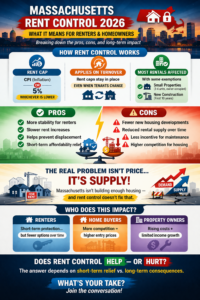
Massachusetts Rent Control Ballot 2026 Learn about the proposed Massachusetts rent control bill that will make it to November 2026’s ballot.[/caption]

The Massachusetts rent control ballot 2026 could reshape the housing market…proposal on the November 3, 2026 ballot: the Massachusetts Rent Control Initiative, sometimes referred to as “rent stabilization.”

Supporters argue the measure will protect renters from rising housing costs. Critics believe it could worsen the housing shortage and distort the real estate market.

With housing affordability becoming one of the most pressing issues in the Commonwealth, it’s important that voters understand not just the headline claims — but how the policy actually works, what the real tradeoffs are, and how it could impact renters, homeowners, buyers, sellers, and investors.

This article explains the proposal in plain language, lays out the pros and cons of rent control, examines the long-term effects on home buyers and sellers, and concludes with why I believe the initiative is ultimately a bad policy direction for Massachusetts.

What Is the Massachusetts Rent Control Ballot 2026 Initiative?

The Massachusetts rent control initiative proposes a statewide limit on how much landlords can increase rent each year for most residential rental properties.  The proposal has been spearheaded by the Home for All Massachusetts Coalition.

What does the proposal actually do?

Under the proposed law:

  • Annual rent increases would be capped at the lower of:
    • The Consumer Price Index (CPI), which tracks inflation, or
    • 5% per year
  • The cap would apply not only to existing tenants, but also when a unit changes tenants.
  • The goal is to slow rent growth across the state and prevent large year-over-year rent hikes.

This would mark a significant shift in Massachusetts housing policy. Rent control was effectively banned statewide in 1994, and local municipalities have not been allowed to impose it since.

Which Properties Would Be Exempt Under The Proposed Massachusetts Rent Control Bill?

The proposal includes several exemptions designed to reduce the impact on certain property types and encourage continued development.

These exemptions typically include:

  • Owner-occupied buildings with four or fewer units, protecting small homeowners who rent part of their property.
  • New construction rental housing for the first 10 years, aimed at encouraging developers to keep building.
  • Public housing and institutional housing, which operate under separate regulatory systems.
  • Short-term rentals, usually defined as rentals under 14 days.

Even with these exemptions, a large share of the Massachusetts rental housing stock would still be affected.

Why Is Rent Control Being Proposed Now?

Housing costs in Massachusetts have risen sharply over the past decade. Low vacancy rates, limited land availability, restrictive zoning laws, and slow construction timelines have created persistent supply shortages.

Supporters argue rent control is necessary to:

  • Protect tenants from sudden price increases
  • Prevent displacement in high-demand neighborhoods
  • Provide stability during housing shortages

Opponents argue that rent control does not address the underlying causes of the crisis and may worsen long-term affordability.

What Are the Pros of Rent Control in Massachusetts?

To evaluate the Massachusetts rent control proposal fairly, it’s important to recognize the real benefits supporters believe rent control can provide.

Does Rent Control Provide Greater Stability for Renters?

One of the strongest arguments for rent control is tenant stability.

By limiting annual rent increases, rent control can:

  • Reduce financial shocks caused by sudden rent hikes
  • Allow households to better plan long-term budgets
  • Provide housing security for seniors, families, and people on fixed incomes

In high-cost housing markets, even modest rent increases can force families to relocate. Rent stabilization policies aim to slow this process and help renters remain in their homes longer.

Can Rent Control Reduce Displacement and Gentrification?

In rapidly changing neighborhoods, rent control is often promoted as a tool to reduce displacement.

Supporters argue that caps on rent increases:

  • Allow long-term residents to remain in place
  • Preserve community networks and neighborhood stability
  • Prevent rapid turnover driven by speculative rent increases

While rent control alone cannot stop gentrification, it may slow the pace of neighborhood turnover in certain areas.

Does Rent Control Offer Short-Term Relief During Housing Shortages?

In periods of extreme housing demand, rent stabilization can serve as a temporary buffer.

Supporters view it as:

  • A short-term affordability measure
  • A way to buy time while new housing supply is developed
  • A stabilizing policy during market volatility

For renters struggling with rising costs, this immediate relief is often the most tangible benefit.

What Are the Cons of Rent Control?

Despite its appeal, rent control carries significant long-term risks that many economists and housing experts highlight.

Does Rent Control Reduce Housing Supply?

One of the most consistent criticisms is its impact on housing supply.

When rental income growth is limited:

  • Developers may delay or cancel new apartment projects
  • Investors may shift capital to other markets or asset types
  • Small landlords may sell or exit the rental business

Over time, fewer new rental units are built. When supply shrinks and demand remains strong, housing shortages become worse — not better.

Can Rent Control Lead to Lower Property Maintenance?

Another concern is building quality.

With capped revenue growth, some property owners respond by:

  • Reducing maintenance budgets
  • Postponing upgrades
  • Limiting long-term capital improvements

This can gradually lead to older, deteriorating housing stock, particularly in buildings that already require ongoing maintenance.

While responsible landlords continue to maintain properties, the economic incentives become weaker.

Does Rent Control Create Market Inefficiencies?

Rent control often benefits some groups while disadvantaging others.

Common side effects include:

  • Long-term tenants benefiting from artificially low rents
  • New renters facing higher market-rate prices
  • Reduced mobility, as tenants stay in units that no longer match their needs

This can create mismatches in housing allocation and reduce the natural turnover that helps markets function efficiently

Does Rent Control Actually Improve Overall Affordability?

While rent control helps current tenants in controlled units, it does not increase housing supply.

Without addressing zoning restrictions, construction costs, and permitting delays, overall market affordability remains constrained.

In many cases, price pressure simply shifts to uncontrolled units, leaving first-time renters and new residents facing higher barriers to entry.

How Does Rent Control Affect Home Buyers Long Term?

Although rent control is focused on rental housing, it indirectly reshapes the homebuyer market. With rent control, the incentive for investors is lost. They will no longer invest in housing projects or rental units because it is now a controlled space with already tight margins and seek investments elsewhere. 

Does Rent Control Increase Competition for Starter Homes?

When rental supply shrinks, more households turn to homeownership sooner than planned.

This can:

  • Increase demand for entry-level homes
  • Drive up competition among first-time buyers
  • Put upward pressure on starter-home prices

As a result, affordability challenges shift from the rental market to the purchase market.

Can Reduced Construction Keep Prices Elevated?

When fewer rental and multifamily projects are built, overall housing supply growth slows.

This contributes to:

  • Persistent inventory shortages
  • Continued upward pressure on home prices
  • Fewer affordable housing options for buyers

Buyers face tighter markets and reduced choice.

Are First-Time Buyers Impacted the Most?

First-time buyers are particularly vulnerable because:

  • They already face affordability hurdles
  • They rely on entry-level inventory that is often limited
  • Increased competition raises down payment and qualification barriers

Rent control can unintentionally make the path to homeownership more difficult.

How Does Rent Control Affect Home Sellers?

Sellers are affected in different ways depending on property type.

Do Small Multifamily Property Values Decline?

For owners of duplexes, triplexes, and small apartment buildings, property value is tied directly to rental income potential.

When rent growth is capped:

  • Investor demand may decrease
  • Sale prices may soften
  • Financing becomes more conservative

This impacts small property owners who rely on rental income as part of retirement planning or long-term investment strategies.

Can Single-Family Home Demand Rise?

In the short term, some sellers of single-family homes may benefit.

As renters seek alternatives:

  • Demand for homes may increase
  • Competition may rise
  • Prices may temporarily strengthen

However, this effect often fades if affordability worsens and buyer budgets become strained.

Does Rent Control Reduce Market Activity Over Time?

Uncertainty around housing policy can lead to:

  • Reduced transaction volume
  • Lower investor participation
  • Slower market turnover

Healthy housing markets depend on the consistent movement of buyers and sellers. Policy instability can dampen this activity.

Why I Oppose the Massachusetts Rent Control Initiative

While the intent behind rent control is understandable, I believe this proposal is a mistake for Massachusetts.

Government Should Not Interfere With Free Housing Markets

I feel housing markets function based on supply and demand.  The government should no interfere with a free market.

Artificial price controls:

  • Distort investment incentives
  • Reduce capital flowing into housing development
  • Create unintended economic consequences

History shows that price controls rarely solve shortages. Instead, they often create inefficiencies and long-term distortions.

Winers and losers are created byt the Massachusetts Rent Control Ballot for 2026

Why I Oppose Rent Control in Massachusetts

While the Massachusetts rent control initiative is rooted in a real concern — rising housing costs — I believe it is the wrong solution to the problem. It may provide short-term relief for some renters, but it introduces long-term risks that could worsen affordability, reduce housing supply, and create unintended consequences across the entire housing market.

At a fundamental level, I also have a broader concern with policies like this: when government steps in to benefit one group, it often does so by placing a financial burden on another. In this case, rent control is designed to help tenants, but much of the cost is shifted directly onto property owners — and ultimately, the broader housing market.

Quick Summary: What’s Problematic About Rent Control

On the surface, the Massachusetts rent control ballot questions may initially make sense to say yes to.  But long-term it:

  • Doesn’t fix the real problem
    Rent control addresses rising rents, but not the underlying issue — a shortage of housing supply. Without increasing supply, affordability pressures remain.
  • Reduces new housing development
    Rent caps make future rental income less predictable, which discourages developers and investors from building new housing. Over time, this leads to fewer available units.
  • Shifts costs instead of lowering them
    Property taxes, insurance, maintenance, and repair costs continue to rise. When rent increases are capped, those costs don’t disappear — they are absorbed by landlords or shifted elsewhere in the market.
  • Can lead to lower property maintenance
    With limited ability to increase income, some property owners delay repairs or upgrades. This can gradually impact housing quality and neighborhood conditions.
  • Creates winners and losers
    Existing tenants in controlled units benefit, but new renters face tighter inventory and higher market prices. The system favors those already in place while making it harder for others to enter.
  • Hurts first-time buyers
    As rental supply tightens, more people turn to homeownership sooner than planned. This increases competition for entry-level homes and pushes prices higher.
  • Tying rent increases to CPI creates mismatches
    Inflation does not always reflect actual housing costs. Expenses like insurance, construction, and local taxes can rise faster than CPI, creating financial pressure on property owners.
  • Worsens long-term affordability
    By discouraging development and limiting supply, rent control can make housing more expensive over time — the opposite of its intended goal.

The Bigger Concern: Shifting Burdens Through Policy

One of my biggest concerns with rent control is not just the economics — it’s the structure of the policy itself.

When the government intervenes in a market to help one group, it rarely eliminates costs. Instead, it redistributes those costs.

In this case:

  • Renters receive protection from rising prices
  • Landlords absorb capped income despite rising expenses
  • Developers face reduced incentives to build
  • Future renters and buyers deal with a tighter supply and higher competition

That imbalance matters.

Housing markets work best when policies encourage greater supply, investment, and flexibility. Policies that restrict pricing without increasing supply tend to shift pressure rather than relieve it.

Final Perspective

Rent control is appealing because it offers a clear and immediate response to a visible problem. But housing is a complex system, and simple solutions often create unintended consequences.

While some renters may benefit in the short term, the long-term effects — reduced supply, increased competition, and distorted incentives — can make the overall housing situation worse.

If Massachusetts wants to improve affordability in a meaningful way, the focus should be on building more housing, improving zoning, and increasing supply — not limiting how housing is priced.

How are you going to vote on the Massachusetts rent control Ballot 2026 come November?

Will rent control lower rents in Massachusetts?

It may slow increases for some tenants, but it does not lower overall market rents and often raises pressure on uncontrolled units.

Does rent control apply to all rental properties?

No. The proposed rent cap for Massachusetts in 2026 exempts small owner-occupied buildings, new construction for 10 years, public housing, and institutional housing are typically exempt.

Will landlords still be able to raise rent?

Yes, but only within the CPI or 5% annual cap.

Does rent control help first-time buyers?

Often no. Reduced rental supply and higher home competition can make buying more difficult.

Is rent control permanent?

Once enacted, rent control policies are difficult to reverse, even when economic conditions change.

Final Thoughts On The Rent Control Ballot 2026

The rent control proposal Massachusetts ballot initiative reflects real frustration with rising housing costs — frustration that is justified.

However, well-intended policies do not always produce good outcomes.

Rent control may help some renters in the short term, but it risks worsening housing shortages, discouraging development, and creating long-term affordability challenges for both renters and homeowners.